mail@crispycontent.de
Last updated on September 15, 2026 at 08:47 AM.
On 21 July 2026, Substack integrated the AI detection tool Pangram. Pangram is an automated detector that allows readers to scan any text on the platform for its AI content and receive a percentage estimate. The premise behind it: anyone who writes with AI delivers inferior content. Is that true? That's like banning a carpenter from using a power drill and claiming only a manual screwdriver produces quality. This article analyses how Pangram works, who benefits from the paternalism, why the claimed accuracy doesn't hold under real-world conditions, and why social monitoring would be the better quality filter.

Why Substack is betting on AI detection now
Substack has positioned itself for years as a platform for independent writers who earn their living from paying subscribers. The business model stands or falls on one assumption: readers pay for human voices, not machine-generated text. CEO Chris Best puts it this way: "When content made by no one takes over parts of the internet that are supposed to be human, it pollutes the commons."
Anyone who produces a newsletter with AI tools knows the real bottleneck: the path from raw draft to finished format. This is precisely where a well-designed production environment comes in—one that spans from keyword to published CMS article, with connected databases, LLM interfaces, and clean approval workflows that document who is accountable for each step. Anyone who sets up their processes this way can refute a false scan.
The Pangram integration is Substack's answer to a real concern—but the solution confuses the tool with the outcome.
What Substack has actually introduced with Pangram
The Pangram integration on Substack allows readers to scan any text of more than 100 words published after 21 July 2026. The scan delivers a percentage estimate: how much of the text presumably comes from a human, how much from an AI. The feature is available on iOS and the web, for posts, Notes, replies, and comments alike.
Creators retain an opt-out option. Those who deactivate the scan receive the label "AI detection unavailable"—visible to every reader. Additionally, authors can add a "How I make this" statement describing their production process. Scans can be reported or removed if an author considers them inaccurate.
| Element | Scannable | Not scannable |
|---|---|---|
| Posts (>100 words, after 21.7.2026) | Yes | Posts before 21.7.2026 |
| Notes and Replies | Yes | Texts under 100 words |
| Comments | Yes | Images, audio, video |
| Opt-out consequence | — | Label "AI detection unavailable", no score |
The architecture is well thought out: Substack gives readers a tool without forcing authors. But the social dynamics work differently. A visible "AI detection unavailable" label reads like an admission of guilt—regardless of whether the author uses AI or not.
How Pangram detects AI-generated content—and where the method fails
Pangram claims an accuracy of 99.98% with a false-positive rate of 1:10,000. According to its own figures, that means: out of 10,000 purely human-written texts, statistically only one is falsely flagged as AI-generated. The number sounds reassuring. It does not withstand independent scrutiny.
An academic discussion on Reddit and a systematic evaluation in Computers & Education (2026) reveal a real-world false-positive rate of approximately 2% under everyday conditions—though this figure comes from different test conditions than Pangram's own test set. Documented errors on r/Substack demonstrate that texts written before Large Language Models even existed are being flagged as AI-generated. Over 80 comments have collected detection errors since launch.
| Criterion | Pangram's own claim | Independent study findings |
|---|---|---|
| Accuracy | 99.98% | Not independently confirmed |
| False-positive rate | 1:10,000 (0.01%) | ~2% under real-world conditions |
| ESL bias (non-native speakers) | Not addressed | Elevated false detection rate documented |
The problem of statistical scaling
The discrepancy between 0.01% and 2% sounds academic. At 100,000 scanned texts—a realistic order of magnitude for a platform with millions of users—Pangram's own claim yields 10 falsely flagged authors. The independently measured rate yields 2,000. Two thousand authors whose reputation is damaged without having done anything wrong. For professional writers whose income depends on their credibility, every single false flag is reputational damage that cannot be repaired after the fact.
Who does AI detection on Substack actually serve?
Pangram sells the solution to a problem that Pangram itself defines. Every integration on a major platform validates the product and creates demand at the next platform. That is a business model that needs to be named before taking the results at face value.
- Substack's interest: Paying subscribers should trust "human" content. Trust secures retention, retention secures revenue. The Pangram integration is a trust signal for paying readers.
- Pangram's interest: Every prominent integration proves market relevance. Substack is a reference client, not an end customer.
- Who loses: Authors who use AI as a tool—for research, structuring, translation, variations—without compromising the quality of their texts. They are placed under blanket suspicion.
A Pangram score measures a production tool, not a voice. And it is the voice that makes a brand recognisable. The machine produces the generic AI sound that readers and detectors alike can spot. The remedy is voice style engineering that teaches the AI your own brand voice—through voice profiles, corporate voice systems, and style guides, so the end result is a text that sounds like someone, not like no one.
The power-drill question—separating tool from outcome
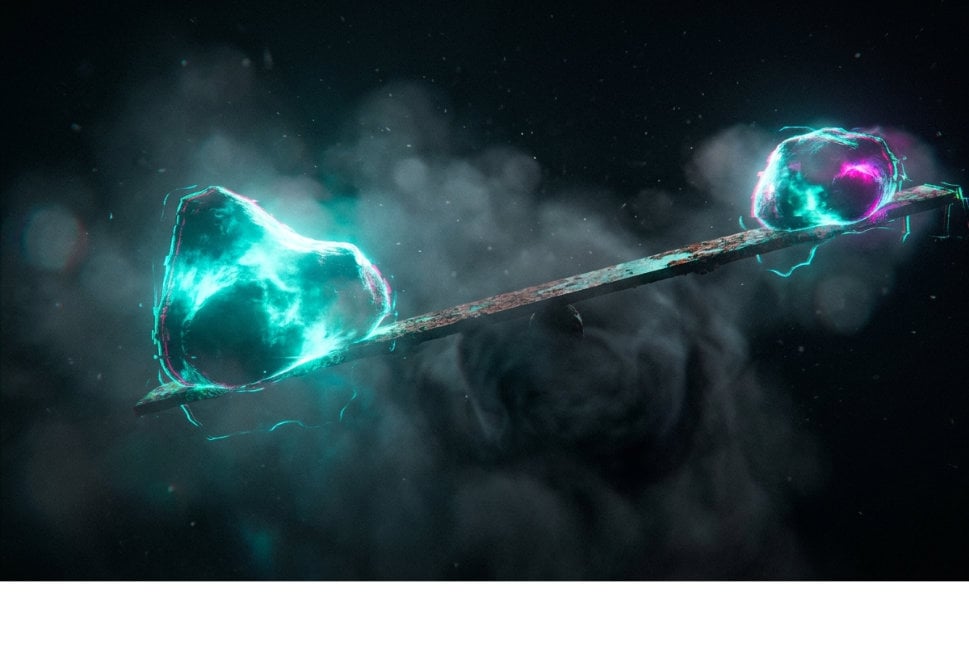
Quality is measured by the outcome. A craftsman who uses a power drill doesn't deliver worse work than one with a manual screwdriver—he delivers it faster. The screw sits just as tight. The shelf hangs just as straight. No client asks about the tool as long as the result is right.
AI as a tool means: accelerating research, checking structure, testing variations, reviewing translations. The outcome remains under human accountability. The real question is: Does someone stand behind the content with their name? If yes, the tool is irrelevant.
| Tool pairing | What measures quality? | What does Pangram measure? |
|---|---|---|
| Power drill vs. manual screwdriver | Is the screw tight? | Which tool was used? |
| Calculator vs. mental arithmetic | Is the result correct? | Was an aid used? |
| AI-assisted draft vs. blank document | Is the text substantive, clear, verifiable? | What is the statistical AI percentage? |
Pangram measures the process, not the product. Declaring the process the quality criterion penalises efficiency.
Social monitoring as an alternative to automated AI detection
The community identifies poor content more reliably than an algorithm. Not through a score, but through behaviour: engagement, comments, subscriber retention, paid conversion. Those who deliver substance keep subscribers. Those who publish AI slop—generic, substanceless output without editorial accountability—lose them. The market self-regulates when you let it.
A 2026 arXiv study examines collective AI detection in Reddit communities and shows: Human evaluation judges more context-sensitively than automated tools. The community recognises not only whether a text sounds machine-generated, but whether it has something to say. A Pangram score says nothing about relevance or originality. A subscriber who cancels delivers a far clearer signal.
Substack's own system already provides the right signals: likes, restacks, comments, paid conversion rate. These are quality indicators that no detector score can replace. They measure whether something works.
Content strategy doesn't end with a single post. Anyone who wants to build brand perception, increase engagement, and qualify leads through to close thinks in campaigns. The development, production, and management of creative, marketing, and lead-gen campaigns reveals whether a positioning authentically holds or is merely claimed.
What the Pangram integration means for content strategies
Anyone who uses Substack as an owned-media channel—and organisations like the US State Department, Tory Burch, and a16z already do—must factor the scan function into their editorial processes from now on. A high AI score on a corporate newsletter damages brand perception, regardless of whether the score is accurate. The perception is the damage.
Three courses of action are available:
- Activate opt-out: Communicate transparently why. Use the "How I make this" statement to disclose your production process. Downside: the "AI detection unavailable" label creates suspicion among uninformed readers.
- Document editorial processes: Set up versioning, approval workflows, and author attribution so that a false scan is refutable. This takes effort but protects reputation.
- Sharpen your style profile: Texts that sound like a recognisable voice are less likely to be flagged as AI-generated. Generic output gets flagged more often—rightly or not.
A documented content strategy makes the use of AI tools transparent and controllable. Those who don't want to build this internally can develop it with a specialised content marketing agency like Crispy Content®.
Whether landing page, white paper, ebook, or social media post: anyone who takes Substack seriously as an owned-media channel needs a broad range of editorial content products that cover all content requirements—products someone stands behind with their name. That is the filter no detector can replace.
Quality comes from accountability, not prohibition
Does someone stand behind it? That is the question that matters. Pangram measures a production tool. The quality of a house is judged by whether the wall is straight—not by whether the bricklayer used a spirit level or a laser level.
Substack's approach is understandable. The concern about a flood of substanceless AI text is legitimate. But the solution lies in social monitoring: engagement, retention, conversion. Numbers that show whether something works. Invest in processes that ensure quality—not in tools that police other tools.
Sources
- Axios (2026): Substack bets readers want to pay for content written by humans. URL: https://www.axios.com/2026/07/23/substack-subscribers-ai-generated-content-pangram (accessed 31.07.2026).
- Jane Friedman (2026): Substack adds AI detection tools, but creators can disable them. URL: https://janefriedman.com/substack-adds-ai-detection-tools-but-creators-can-disable-them/ (accessed 31.07.2026).
- Aragon Research (2026): Substack AI Detection Shifts Content Integrity Rules. URL: https://aragonresearch.com/substack-ai-detection-shifts-content-integrity-rules/ (accessed 31.07.2026).
- Pangram (2026): All About False Positives in AI Detectors. URL: https://www.pangram.com/blog/all-about-false-positives-in-ai-detectors (accessed 31.07.2026).
- Reddit / r/academia (2025): Pangram claims their AI writing detector's false positive rate is only 1 in 10,000 but a study they tout on their own website says it is 2%. URL: https://www.reddit.com/r/academia/comments/1rm11rs/pangram_claims_their_ai_writing_detectors_false/ (accessed 31.07.2026).
- ScienceDirect / Computers & Education (2026): Trusting AI to detect AI? A systematic evaluation. URL: https://www.sciencedirect.com/science/article/pii/S0360131526000540 (accessed 31.07.2026).
- arXiv (2026): For Now: Collaborative AI Detection in r/RealOrAI on Reddit. URL: https://arxiv.org/html/2605.24287 (accessed 31.07.2026).
- Reddit / r/Substack (2026): Running list of Pangram's "AI Detection" errors and other related Substack issues. URL: https://www.reddit.com/r/Substack/comments/1v6m8ye/running_list_of_pangrams_ai_detection_errors_and/ (accessed 31.07.2026).
- Substack Support (2026): How can I detect AI on Substack? URL: https://support.substack.com/hc/en-us/articles/50891130623508-How-can-I-detect-AI-on-Substack (accessed 31.07.2026).
 Gerrit Grunert
Gerrit Grunert is the founder and CEO of Crispy Content®. In 2019, he published his book "Methodical Content Marketing" published by Springer Gabler, as well as the series of online courses "Making Content." In his free time, Gerrit is a passionate guitar collector, likes reading books by Stefan Zweig, and listening to music from the day before yesterday.























































































































































.png)










.jpg)

-1.jpg)

-1.jpg)
.jpg)

.jpg)










.jpg)