 mail@crispycontent.de

Why Early-Stage Companies Need Different Marketing Partners
Marketing in established companies often follows set processes, fixed annual budgets, and clear brand guidelines. Startups face a different reality: uncertain business models, ongoing product iterations, and shifting target audiences. The right agency must not only accept this dynamic but actively manage it.
Unique Rules in the Startup Environment
Startup teams often work with unfinished products, undefined target groups, and evolving business models. Instead of a comprehensive brand manual, there’s usually just a logo, a rough vision, and a pitch deck. The right agency translates this interim state into actionable communication: helping to formulate customer segment hypotheses, test initial positioning, and immediately feed market feedback into messaging. This creates a clear profile step by step—without months of strategy work.
Maximizing Impact with Limited Resources
Early-stage companies know budget constraints. A suitable agency prioritizes strictly: distinguishing between activities that directly drive growth, validation, or funding, and those that are merely “nice to have.” This includes clear frameworks for budget allocation, transparent reporting, and a focused channel mix. Instead of many parallel activities, the agency deploys a few, highly measurable levers that can be scaled later.
Managing Growth Dynamics
As traction builds, requirements and complexity increase rapidly: more leads, more channels, more customer support. A startup-focused agency anticipates these next steps early. It builds processes so campaigns can scale without performance drops or team overload. This includes scalable tracking setups, clean data flows, automatable journeys, and clear playbooks for new markets or segments.
Ensuring Business Model Adaptability
Pivots are not exceptions—they’re part of the business. The right agency sees brand work as a flexible architecture, not a rigid construct. Messaging is developed to adapt quickly to new product features, target groups, or pricing models—without starting from scratch each time. Modular content, reusable story elements, and scalable design systems support this flexibility.
Consciously Shaping Identity from Day One
Even as products and business models evolve, startups need a recognizable identity. A specialized agency develops a brand story that appeals to both customers and investors. Instead of bloated brand books, clear narratives, visual basics, and tone-of-voice guidelines are created for easy team adoption. This ensures consistent market perception at every touchpoint.
Systematically Planning and Accelerating Growth
Early-stage growth is rarely linear. Strong partners build a growth logic based on experimentation, data, and ongoing optimization—closely integrated with product and sales. The goal: repeatable, scalable, and economically viable growth drivers.
Testing Ideas, Not Just Rolling Out Campaigns
Rather than developing campaigns on gut feeling, a growth-oriented agency works with hypotheses and clear objectives. Different value propositions, target groups, or offers are systematically tested. Landing pages, ad variants, and onboarding flows provide data to identify which channel, message, and format combinations truly work. This approach reduces waste and accelerates learning.
Integrating Growth Mechanics
Sustainable growth rarely comes from media spend alone. The right agency looks beyond classic campaigns: identifying referral opportunities, integrating sharing moments into product and communication, and leveraging social proof strategically. This creates growth mechanics that don’t rely solely on paid reach.
Sharpening Product-Market Fit with Marketing Data
Marketing provides valuable insights into product-market fit. An experienced agency uses campaign data, qualitative user interviews, and feedback loops to identify patterns. Which customer segments respond most strongly? Which problem statements generate the highest resonance? These insights inform product decisions and help refine the offering.
Building Scalable Channels
A single channel can deliver initial traction, but sustainable growth requires a portfolio. The right agency evaluates channels for scalability and efficiency, not just reach. It develops clear rules for when to expand, automate, or supplement a channel, continuously monitoring acquisition costs, lifetime value, and conversion rates to find the optimal mix.
Embedding a Culture of Testing
Tests are only valuable if structured and evaluated. An experienced partner provides a clear testing roadmap, documents assumptions and results, and derives actionable consequences. Marketing becomes a continuous optimization process, not a series of isolated, hard-to-compare actions. This culture benefits all growth phases long-term.
Efficiently Gaining Market Feedback with Lean Methods
Startups must learn quickly what works—without burning resources. Lean marketing applies product development principles to communication and campaign work.
Developing Communication Like a Product
Instead of planning perfect campaigns, the right agency uses minimally viable marketing actions. A simple landing page, focused email set, or basic social proof test can be enough for early feedback. Content and channels are then expanded based on these insights.
Establishing Rapid Learning Cycles
Speed in decision-making from data is essential. A lean agency works in short cycles: ideation, execution, deployment, evaluation, adjustment. Reporting is not an end in itself but the basis for concrete optimizations—in both messaging and channel strategy.
Making Data-Driven Decisions
With limited resources, every decision needs a clear data foundation. The right agency implements a setup that reliably captures and visualizes relevant metrics. Instead of focusing on isolated “success numbers,” it considers the entire journey: from first interaction to activation, repeat purchase, or referral.
Focusing Resources Effectively
Lean doesn’t mean “minimal effort at any cost,” but focused use of time, budget, and expertise. The agency helps prioritize tasks to relieve internal teams without losing control. Routine activities can be automated or clearly documented, while strategically important initiatives receive the necessary attention.
Identifying and Leveraging Early Failures
Not every experiment succeeds and that’s valuable. A lean-minded agency makes failures transparent, documents learnings, and prevents inefficient measures from being repeated. This creates decision-making foundations that extend beyond the current campaign.
Aligning Marketing with Investor Communications
For many startups, the connection to investors is as important as to customers. Communication serves a dual purpose: building market trust and supporting funding rounds.
Sharpening Investor Materials
Agency support for investor presentations goes beyond design. It structures arguments, sharpens the narrative, and highlights growth story, market potential, and differentiation. Metrics, milestones, and customer feedback are prepared to support the investment story.
Making Milestones Visible
Product stages, customer numbers, or partnerships matter beyond internal use. A marketing agency focused on startups leverages these to build trust with the market and investors. Targeted communication around product updates, references, or certifications makes progress tangible.
PR Around Funding Phases
Funding rounds are communication levers. A specialized agency coordinates messaging, timing, and channels: from press releases to owned media and social media. This increases visibility without disclosing confidential information or creating false market expectations.
Positioning Founders as Thought Leaders
In early stages, founders are often the strongest brand ambassadors. The right partner helps them build their thought leadership—through guest articles, interviews, talks, or proprietary formats. This creates a credible presence that appeals to both talent and investors.
Preparing for Future Exit Scenarios
Even if an exit seems distant, professional communication from the start supports future acquisitions or IPOs. An experienced agency ensures that metrics, customer stories, and market positioning are well documented and communicated, creating a compelling success story for strategic stakeholders.

Building Reach and Trust with Limited Resources
Large budgets are rare in early stages. It’s all the more important to choose partners who use creative, cost-efficient methods to build awareness and trust without long-term commitments that limit flexibility.
Creative Growth Without Major Investments
Lean budgets require precise actions. An experienced agency focuses on formats that deliver high impact at manageable costs: targeted content pieces, well-placed campaigns, or user-centric landing pages that drive leads or registrations. Relevance for the right target groups takes precedence over broad presence.
Strategically Deploying Unconventional Tactics
Unusual actions can generate attention but also carry risks. The right agency plans such measures strategically: defining clear objectives, selecting appropriate touchpoints, and ensuring alignment with the overall story. This way, creative approaches amplify impact rather than serving as ends in themselves.
Building Organic Visibility Strategically
Paid reach is scalable but expensive. A structured approach to organic visibility is essential: SEO-optimized content, clear thematic clusters, and formats that generate long-term traffic and leads. An experienced partner develops content that is both search engine and user-friendly.
Fostering Community Around the Product
Communication doesn’t end at first contact. A startup-focused agency develops concepts that actively involve users: feedback rounds, user groups, early-access programs, or formats for sharing experiences. This builds a community that co-creates the offering.
Leveraging Partnerships Effectively
Collaborations with other companies, platforms, or multipliers can quickly expand reach. The right agency identifies compatible partners, develops joint formats, and coordinates communication—ensuring mutual benefit and audience alignment.
Ensuring Flexible and Transparent Collaboration
Dynamic markets require partners who can reflect this agility organizationally. A startup agency adapts workflows, contract models, and toolsets to team realities.
Structuring Projects in Clear Phases
Shorter phases work better than rigid annual plans. An agile agency operates in clearly defined work stages, setting goals, actions, and KPIs for each. At the end of each phase, results inform next steps, keeping teams agile even as priorities shift.
Choosing Flexible Contract Models
Long-term commitments with little flexibility pose risks for startups. Suitable agencies offer models with defined terms, transparent deliverables, and the ability to adjust focus. This allows capacity to be flexibly adapted to new situations without renegotiating the partnership each time.
Professionally Managing Rapid Pivots
Focus can shift during ongoing projects—due to new features or market feedback. The right partner has processes to handle such changes: priorities are reviewed together, roadmaps adjusted, and impacts on timing and budget made transparent. Projects remain manageable even as direction changes.
Efficiently Integrating Distributed Teams
Many startups work remotely or in hybrid models. The agency should be familiar with distributed teams and use tools that simplify collaboration. Clear communication routines, well-documented decisions, and accessible project statuses keep everyone aligned.
Selecting Tools Thoughtfully
A lean tech stack streamlines collaboration. An experienced agency recommends only essential tools and integrates them into existing systems. Reporting, content production, and coordination run on a manageable number of platforms that the team can use long-term.
Leveraging Technology and Launch-Related Services
Many startups operate in tech-driven markets. They need services that combine classic communication with specific platforms, audiences, and formats.
Supporting Product Launches on Relevant Platforms
Specialized platforms can play a major role in new product or feature launches. The right agency prepares launch teams: developing clear descriptions, coordinating timelines, and ensuring rapid response to feedback. The goal is to maximize launch visibility and gather qualitative feedback.
Planning Campaigns for Community-Funded Projects
For community-funded projects, marketing and campaign pages must be closely aligned. An experienced partner builds a narrative that clearly communicates the product idea, value proposition, and use of funds. Communication plans cover both the preparation phase and the campaign’s duration and aftermath.
Acquiring Early Users in Product Development
Early users are invaluable for feedback and iteration. A startup-focused agency develops targeted messaging, incentives, and journeys to guide prospects through registration, onboarding, and feedback phases—creating a structured process for close collaboration between product and marketing teams.
Communicating Technology Products Clearly
Complex technologies require simple explanations. The right agency translates technical features into clear benefits for different audiences—from developers and decision-makers to end users. Formats like use-case stories, application examples, or architecture overviews help build product trust.
Building Dialogue with Specialist Audiences
In tech-driven markets, developer communities and specialist forums are key multipliers. An experienced agency helps identify relevant topics, select suitable formats, and foster authentic dialogue. The goal is not just reach, but credible presence in relevant ecosystems.
Learning from the Experience of Other Scalers
Learning from other companies helps avoid common mistakes and recognize successful patterns faster. A startup-focused agency brings this perspective to the partnership.
Understanding Growth Paths of Successful Companies
Successful companies rarely follow identical paths, but recurring principles exist: clear positioning, clean data, structured experiments, and strong alignment between product, marketing, and sales. An experienced partner makes these patterns visible and adapts them to your situation—without blind copying.
Preparing Strategies for Later Growth Stages
What works early on may not scale later. The right agency thinks mid-term: ensuring today’s measures can be professionalized later—through scalable processes, reusable content, and clean data structures. This prevents growth from stalling at organizational limits.
Avoiding Common Pitfalls
Overinvesting in single channels, unclear goals, or poor alignment with product and sales are common blockers. An experienced partner spots these patterns early and helps counteract them: with clear objectives, coordinated roadmaps, and transparent decision-making.
Adapting Marketing to Company Development Stages
Marketing needs change with each funding round, market entry, and new product. A startup-experienced agency continuously adjusts strategy and actions: from validation to scaling to internationalization. Marketing always aligns with the current phase.
Maintaining Perspective on Future Exit Scenarios
Whether planning an IPO, sale, or long-term growth, today’s communication impacts future scenarios. The right partner ensures brand, customer base, and communication history present a consistent picture. Documented successes, clear growth data, and strong positioning support future strategic decisions.
Content Marketing Excellence®

Ebooks, Online Courses and Books
Free Ebook Content Production with Airtable
A FREE ebook for all who want to make their content production easier and more efficient — with Airtable.
Mehr lesen
Free Ebook Content Marketing Tools Essentials
A FREE ebook with 15 essential tools to streamline your content marketing production – now and forever!
Mehr lesen
Free Online Course Making Content by Crispy Content®
7 Lessons to Quickly, Easily, and Economically Produce High-Quality, Digital Content.
Mehr lesen
Free Ebook Website Content Strategy
A FREE ebook with 10 essential steps to create your perfect website content strategy – for more brand awareness, visibility, traffic and conversions!
Mehr lesenMore topics you might like

Sustainable Growth in B2B: Why It Begins Only After the Deal Is Closed
Discover why real B2B revenue often begins after the deal is closed and how post-sales strategies drive sustainable growth.

From Visibility to Trust: Why B2B Brands Must Rethink Their Approach Now
B2B marketing is facing a turning point: Learn why trust is becoming the new currency for sustainable growth.

When Artificial Intelligence Falters: What Businesses Need to Know
AI models are losing stability. Find out how companies can secure marketing processes and develop strategies for 2026.

Content as a Competitive Advantage in the Age of AI
How companies turn content into a competitive advantage in the age of AI through strategic orchestration, governance, and structural clarity.

Turning Existing Content into Measurable Success
Learn how companies transform content into sustainable multi-channel strategies and increase reach, ROI, and impact with existing content.

A Shared Language for Consistent Brand Communication
Discover how a shared terminology strengthens brand communication, content, and CX and which steps truly matter.

Content Overload and Attention: Why Systems Make the Difference
Content overload meets limited attention: how structured systems strengthen brand communication and marketing efficiency.

How to Choose the Right B2B Content Partner
Learn what matters when choosing a B2B content partner – from methodology and transparency to strategic collaboration.

Why Companies Need More Than Just a Content Strategy
Strategies alone aren’t enough: A content system delivers sustainable marketing success. Here’s how to make it happen.

The Hidden Costs of Unstructured Content Management
Missing content management processes lead to high long-term costs. How unstructured work builds content debt and how to avoid it.

Staying Visible in the Age of AI: Mastering Dual-Audience Content
How brands can simultaneously reach humans and AI systems with dual-audience content to safeguard their visibility.

The Epic Split: Why B2B and Brand Are Not Opposites
Creative B2B branding that builds relevance, attention and trust. Why brand, culture and emotions matter in modern B2B marketing.

Strategically Designing Topic Worlds for Personal Brands in B2B
How topic worlds for personal brands in B2B drive clarity, reach, and impact.

AI Competence Over Tool Overkill: The Path to True Content Excellence
How content expertise takes brand communication to the next level — with practical, actionable recommendations.

Service-as-a-Software: When the Machine Does the Job
Automated AI services are redefining B2B marketing: greater efficiency, new governance challenges — everything you need to know.

1,000 AI Agents And One Employee
Discover how AI agents are reshaping organizations and how to bridge the gap between technology and your workforce.

The End of Inbound Marketing as We Know It
Why inbound marketing is reaching its limits for B2B service providers and which channels decision-makers truly use today.

AI Assistants vs. AI Agents: The New Autonomy
How autonomous AI agents and no-code platforms are automating marketing processes and unlocking new potential.
.png)
Why Reach Alone No Longer Convinces
Platform rules end mass outreach: Why content strategies are now the key differentiator in B2B marketing.

Agents, Not Ads: Browsers Are Transforming Marketing Strategies
Agent-based browsers are disrupting traditional content strategies. Discover how organizations can adapt and capitalize on emerging opportunities.

How AI Competence Is Becoming a Corporate Imperative
The AI Act requires companies to develop the AI skills of their own employees from 2025. Here's how they can succeed.

The Signal in The Noise: How Brands Ensure Relevance And Impact
How content marketing works despite the digital noise: strategies for agencies, companies, and decision-makers in the digital age.

Why Most AI Tests Don’t Deliver Reliable Results
Why "AI experts" should stop spreading misinformation: a realistic comparison between research and AI tools.

How Products Become Content Engines For B2B Brands
How B2B brands are leveraging product-driven content for innovative brand communication and activating communities.

Generative AI: A Crisis of Trust for Agencies and Enterprises
How AI-driven errors are reshaping agency workflows and which methods secure trust and quality. Deloitte case study, trends, and practical tips.

Google Update: Removal of &num=100 and Its Impact on SEO Tools
Google Update 2025: The deactivation of &num=100 transforms SEO tools, reporting, and AI data. Here’s how industries and businesses are responding.

B2B Reach: Strategic Partnerships over Content Production Lines
How brands gain visibility: Partnerships and user-generated content are replacing traditional content strategies in B2B. Learn more now.

Germany’s Data Protection Utopia: A Basement Full of Illusions
Germany’s data protection utopia: Why basement LLMs are pure illusion – and how pragmatic rules can safeguard innovation and competitiveness.

Content Strategy for Strong Brand Perception
Discover how strategic content shapes brand perception, strengthens loyalty, and drives measurable growth across all channels.
.jpg)
Success of Viral Marketing Campaigns Without AI
The greatest campaign successes are based on emotion, social dynamics, and the courage to experiment. Discover how brands create genuine attention.

Content Marketing 2025: Opportunities, Risks and the Evolving Role of AI
How AI is transforming content marketing and how businesses can safeguard quality, differentiation, and trust.
.jpg)
Enablement for Marketing Teams: Securing the Future with AI Competence
Enablement equips marketing teams for AI and digitalization. Discover how structured development enables real transformation.

Content Strategy 2025: Uniting Quality and AI in Marketing
How companies use AI, content audits, and governance to implement sustainable content strategies and avoid content chaos.
-1.jpg)
GPT-5 in Practice: What the Data Says About Content Quality
GPT-5 testing proves fewer errors and more consistency. Discover how your content production can benefit today.

Achieve Greater Reach with Existing Content
How companies can achieve greater reach and efficiency by leveraging existing content—complete with real-world examples and a step-by-step guide.
-1.jpg)
Digital Trust: Standing Out from Generic Content with Quality
Strengthen digital trust: How companies can win with quality and transparency instead of generic AI content. Tips and real-world examples.
.jpg)
Cultural Adaptation: Successful International Brand Communication
Cultural adaptation boosts the impact of international marketing campaigns. How can it be achieved in practice? Expert insights & best practices.

AI Image Generation: Practical Insights for Marketing Teams
How AI image generation with Midjourney is transforming marketing. Insights, opportunities, and practical tips for modern communication teams.

Communication Challenge: Making Expertise Visible in B2B Marketing
Discover how companies can make their expertise visible in brand communication and optimize their B2B marketing strategy.

Successfully Implement Content Strategies: Your Guide
Translate strategies into marketing and content formats: How to make your communication more impactful. A practical guide for decision-makers.
.jpg)
AI Marketing Consulting: Automation in the MarTech Ecosystem
AI marketing consulting, no-code platforms & workflow automation: Achieve a smart transformation in the MarTech ecosystem.

Clear ROI: Controlling Marketing Budgets with Metrics
Marketing clarity: How to secure budgets with KPIs and prove impact. Practical, data-driven, and tailored for marketing decision-makers.

Demand Gen Before the Comparison Phase: Gaining a Competitive Edge
Discover how early-stage demand generation empowers B2B brands to enter new markets efficiently and reduce lead costs.

Marketing Departments: Combining Human Expertise and Technology
How marketing teams scale efficiently: combining human expertise and automation for real impact. Practical examples and first steps included.

Efficient Transformation in Marketing: Escaping the Resource Trap
Rising demands, static teams: How to approach marketing transformation in a structured and successful way – including a real-life example.

Modular Content – Boosting Marketing Efficiency
Modular content helps marketing teams save budget and effort. Here's how to increase efficiency and consistency in communication projects.

Knowledge Retention in B2B Marketing: Methods & Tools
How to retain knowledge in B2B marketing. Practical tips on processes, tools, and learning culture. More efficiency for your team.

Using Storytelling Frameworks to Cut Through the Noise
How to increase B2B content effectiveness with structured storytelling – practical insights for immediate use

Work More Efficiently: Master System Diversity in Marketing
System diversity slows down marketing teams. Here’s how to make your infrastructure more productive and future-proof.

Structure Drives Performance: Clear Roles Ensure Content Quality
Structured teams ensure content quality: How to strengthen accountability and output in your marketing organization.

Work More Efficiently: How Clear Standards Help Marketing Teams’ Work
How marketing teams save time, ensure quality, and grow internationally with clear standards: The first step toward a scalable content factory.

How The Content Factory Solves Major Marketing Issues
Build a high-impact content team with the “Content Factory” framework—solve budget, talent & execution gaps through structured marketing processes.

Is the B2B Buying Cycle Really More Complex?
Discover why the fundamental B2B buying process remains unchanged despite new digital touchpoints, and how to leverage this for effective strategies.

How to Make Technical Content Work for Decision-Makers
Transform complex technical content into engaging, strategic insights that resonate with decision-makers in industrial, tech, and B2B sectors.
.jpg)
Maximizing ROI from Thought Leadership Content
Learn how to turn thought leadership content into a measurable business asset that drives trust, engagement, and conversions.

Top 5 Criteria for Choosing the Right Content in B2B Marketing
Discover the 5 key criteria for selecting the right B2B content formats. Learn how to tailor your strategy to personas, touchpoints, and goals.

AI and Cultural Expertise for Your Marketing Organization
This post explains why the right mix of technology and cultural know-how is indispensable when utilizing Artificial Intelligence.

AI Tools For Content Creator
Explore Crispy Content's AI integration strategy that enhances content creation while preserving human creativity and control.

How Our Content Marketing Strategies Drive Brand Awareness, Traffic, Leads, and Sales
Discover how our content marketing strategies drive brand awareness, boost traffic, generate leads, and improve sales outcomes.

Master the Art of Content Strategy for Business Success
Unlock the secrets to developing a content strategy that aligns with your goals, addresses audience needs, and elevates your brand authority.

Webinar: Building An AI Content Machine
Discover how AI transforms content production strategies. Register for our free webinar with AI experts Gerrit Grunert and Jens Palm on November 28th!

How Pharmaceutical Companies Optimize Their Marketing with AI
Discover in our latest blog how pharmaceutical companies can optimize their marketing retainer with the help of AI.
.jpg)
Webinar: Building An AI Marketing Machine
Explore the transformative power of AI in B2B marketing with our webinar "Building an AI Marketing Machine" in cooperation with Salesforce and factory42!

Mastering LinkedIn's Labyrinth: Unveiling Algorithm Secrets
Unlock LinkedIn's potential with our guide. Discover algorithm secrets, optimize content strategy, and learn about future trends.

Revolutionizing Content Creation: The 6 Best AI Tools for Writers
Discover out top 6 AI tools transforming content creation. Enhance your writing process and quality with AI technology – don't miss this opportunity!

Unleashing the Power of Ecommerce SEO
Unleash the Power of Ecommerce SEO: Fix broken links, optimize content, dominate Google rankings, and attract eager customers.

B2B Lead Generation with White Papers
Lead generation with white papers is one of the most effective sales measures in B2B business. Why? We explain that in this article!

The Content Audit - Part 2
In part two of our mini-series, we explain our 4-step road map to our successful content audit resulting in higher rankings in search engines.

The Content Audit - Part 1
In this article we show you just how important a content audit is, how SEO cannot live without good content, and why you need to check in regularly.

The Paid Media Audit - Part 2
In second article of our mini series we show you how to audit your paid media in seven thorough steps.

The Paid Media Audit - Part 1
In this article we take a look at how paid advertisement works, the different approaches of a Paid Media Audit, and which tools can help you up your game.

The CRM Audit - Part 2
In the second part of this mini-series, we'll show you how to perform a CRM audit and get more ROI from your data in seven easy steps.

The CRM Audit - Part 1
In the first part of this mini-series we explain what a CRM audit is, what the benefits are, and which tools to use.

The benefits of a successful pitch-workshop
Our idea of a good workshop consists of six outcomes that must be achieved at the end of a succesful pitch workshop. Discover them here.

Why regular agency pitches don’t work
11 reasons why agency pitches fail to do what they’re designed to do: to choose the right agency for the job – and our proven solution for it.

How to host a perfect pitch-workshop
A workshop instead of a standard pitch? In this article, we explain how to host a perfect pitch-workshop and show the benefits.

SEO For Pharma Companies: Why There is No Way Around It
Pharmaceutical companies, whose products are so in need of explanation and demand, cannot do without SEO. We show why this is so.

HubSpot History: What Made HubSpot a Success
The history of HubSpot shows how it became one of the most popular and demanded marketing software to date. Let's dive into it!

Content-Marketing For Pharma Companies
Nowadays, no pharmaceutical company can afford not to communicate with its target group. In our article, we show why this is the case.

Crispy Content® is looking for a Senior Content Team
Crispy Content® is looking for a Senior Content Strategist (m/f/d) and a Senior Project Manager (m/f/d).

Decoded: Content Marketing and SEO with Brian Dean - Part 2
The best hacks from SEO genius Brian Dean: Learn which strategies you can use to improve your ranking and create gripping online videos.

Decoded: Content Marketing and SEO with Brian Dean – Part 1
The best hacks from SEO genius Brian Dean: Learn which strategies work best for content marketing, PR and landing pages.

TikTok Marketing: 6 Reasons B2B Brands Should Use It
TikTok is one of the quickest growing social media platforms at the moment. We show you 6 reasons why B2B brands should use it too.

Decoded: Content Marketing with Gary Vaynerchuk – Part 2
Learning from the "Content God" - Part 2: Learn from GaryVee which social media strategies will make you successful in 2021.

Decoded: Content Marketing with Gary Vaynerchuk – Part 1
Learn from the "Content God": Find out how GaryVee reaches millions of fans with micro-content, storytelling and an authentic brand - part 2 follows.

An Entrepreneur's Guide to Social Media Management Software
Still wondering what sets social media pros apart from the rest? Social media management software they pay for. We list the ones that are worth to pay for.

Email Marketing with Noah Kagan - Part 2
Do you want to generate leads and more sales through effective email marketing? Discover tips 6 to 8 from online marketing expert Noah Kagan.

Email Marketing with Noah Kagan - Part 1
Want more leads and sales through effective email marketing? Discover the first 5 tips from online marketing expert Noah Kagan - part 2 follows.

The Customer Journey
In "Content Marketing 101" Crispy Content® highlights the most important topics in Content Marketing – here we focus on the customer journey.

The Conversion Funnel
In "Content Marketing 101" Crispy Content® highlights the most important topics in Content Marketing – here we focus on the conversion funnel.

The 7 Steps SEO Audit
In this article, content marketing expert Gerrit Grunert from Crispy Content® shows how anyone can perform an SEO audit in 7 steps.

Content Marketing Decoded: Social Media Examiner – Part 2
You want to improve your performance on Facebook, Instagram, LinkedIn and TikTok? Discover 6 practical tips from Social Media Examiner Michael Stelzner.

Successful Blogging: 14 Effective Example – Part 2
Blog success factors, blog millionaires and your next steps - all this in the second part of our little series on "Successful Blogging".

Successful Blogging: 14 Effective Example – Part 1
We have collected 14 blog examples that have been successful over the last six years. And we have investigated why this is so. Here comes part 1!

Content Marketing Decoded: Social Media Examiner – Part 1
Looking for ideas for your marketing on Facebook, Instagram, LinkedIn and TikTok? Discover 7 practical tips from Social Media Examiner Michael Stelzner.

Content Marketing Decoded: The SEO Hacks of Neil Patel
You want to improve the search engine ranking of your website? In our series we present the most important SEO tips from digital expert Neil Patel.
.jpg)
FREE Online Course: “Making Content” (7 Lessons)
An online course with 7 lessons to produce high-quality digital content – quickly, easily and affordably.

10 Steps For Your Perfect Website Content Strategy – Pt. 2
A guide for content marketers who want to develop a website content strategy. The second part deals with features, structures, keywords and governance.

10 Steps For Your Perfect Website Content Strategy – Pt. 1
A two-part guide for content marketers relaunching a website. The first part deals with goals, target groups, positioning, topics and formats.

15 Content Tools We Still Use | Part 2
We present the tools we use at Crispy Content® to realize content production. Today: Content Production and Content Distribution.

15 Content Tools We Still Use | Part 1
We present the tools we use at Crispy Content® to realize content production. Today: Content Discovery and Content Planning.

Post COVID-19: Reasons Germany will be Your Next Best Market
There will be a future after COVID-19 - and it probably looks more promising in Germany than in most countries of the world. We show you why!

How to Do Content Production for Blogs with Airtable
In this detailed overview, we explain how complex content production projects can be completed with Airtable.

"Car dealerships need social media marketing"
The car industry has been severely affected by the corona crisis. Gerrit gives tips on how the crisis can be used as an opportunity with social media.

Content Marketing Agency - 10 Lessons Across 10 Years
With our ten lessons from ten years as a content marketing agency you can save time, money and stress by reading this now!

Gerrit Grunert: A HubSpot Interview with CIO Applications
What does an international company have to consider when choosing a German HubSpot partner? Gerrit Grunert reveals this in an interview. Read it now!

SEO in Real Life
Here we explain how Google works with a small, real-life theater game from our SEO workshop. Learn more here!

How To Create A Persona
Why are personas important for content marketing? How many do you need? Read about this and more in Gerrit's new book "Methodical Content Marketing".

The digital transformation of the PR Agency
How can PR agencies embrace the digital? This article by Crispy Content® reveals how PR agencies can master digital transformation in 4 easy steps.

An Interview with Sandra Harzer-Kux from Territory
Sandra Harzer-Kux, Managing Director of Germany's leading brand content agency, Territory, in an interview with Gerrit Grunert.

Campaign Management 101: Campaign Layering
Ever wondered how you can convey brand values in a more creative way across multiple platforms? This blog provides an intro campaign layering.

Methodical Content Marketing: Persona Pt. 1
What advantages does persona development have for both sales and marketing teams? What can they add to content marketing? Read more about this works.

Reputation Marketing and ROI
Reputation management has ROI? Yes! And it should be considered reputation marketing instead! How does this work? Read more in this blog to find out!

How Much Does A Content Marketing Strategy Cost?
How much does a content marketing strategy cost? Which aspects go into developing a strategy? The content experts at Crispy Content® break this down.
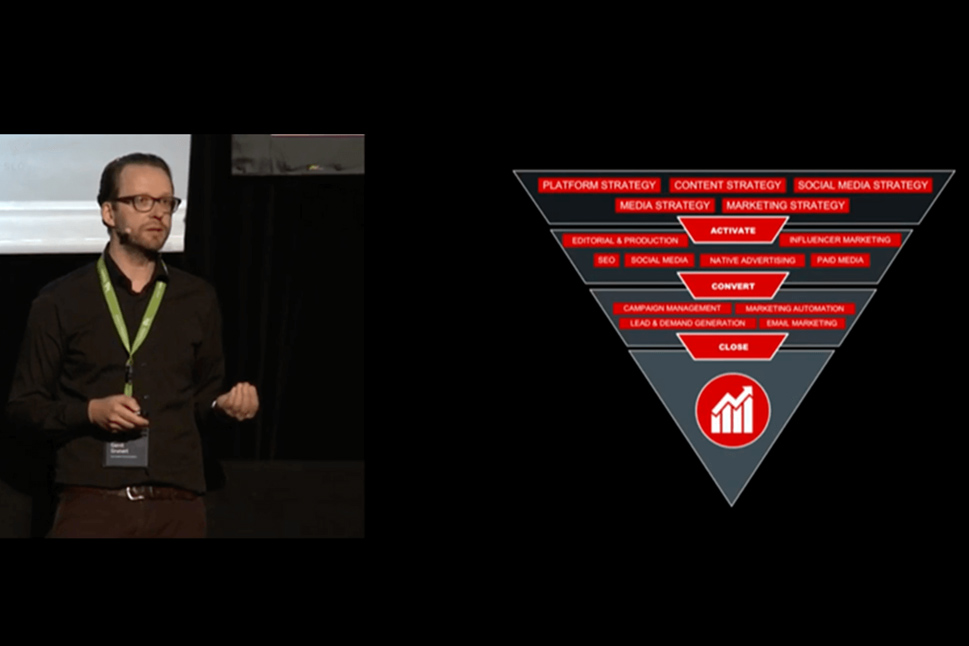
Mo' Money, No Problems – from Searchmetrics Summit 2017
How you can use an optimized customer journey to win over customers and many other topics in our Live Show from Searchmetrics Summit 2017!

Marketing Automation – From Persona to Personalization
Buyer personas are important, but how should you get your message across to individual users? Personalization is the key.

Checklist: Competitiveness Analysis in Content Marketing
Only those with an eye on the competitiveness can position their content marketing strategy successfully. Here’s a handy checklist.

Return On Content Marketing Investment
You’ve invested in a content marketing strategy – but has it been worth it? We show you how to calculate the ROI for your content marketing.

Conversion Optimisation in Content Marketing
In this blog post, we show you how to optimise your conversion rate within your lead generation activities.

Content Marketing: From Strategy to Campaign and Back Again
Campaigns are the beating heart of a content marketing strategy, not merely the icing on the cake. Here’s a recipe to try “at home”.

How to Find the Right Content Marketing Agency
Finding the right content marketing agency can be tricky. These are our insider tips:

Predictive Lead Scoring – A Glimpse Into the Future
Predictive lead scoring builds on traditional methods, but exploits the possibilities of modern technology much more effectively. We show, how it's done!

Big Data in Content Marketing
Here, you can learn why big data is so important to your marketing activities and how your company can best process user-generated data masses.

How to Create a Content Marketing Strategy
Those wishing to invest in content marketing require a tailored strategy. In six easy stages, we show you how to get one.

Lead Scoring: The Highest Form of B2B Marketing
We show you how to use lead scoring to evaluate potential customers more effectively and bridge the gap between marketing and sales.

Next Level Lead Nurturing
Turning leads into customers requires a care, time and a suitable strategy. Lead nurturing accelerates this process significantly.

Outstrip Your E-Commerce Competition
How can online retailers steer the purchase decisions of potential customers – in all phases of the buyer's journey?

The 3 Biggest Content Marketing Pitfalls
Bad content marketing is often marked by the same recurring errors – three of which are particularly severe.

Storytelling: Why the Brain loves Stories
Storytelling and mirror neurons? We explain how to use neuroscientific research to tell stories that will delight your customers.

7 Email Marketing Trends You Should Know
Those who allow email marketing trends to pass them by will soon be watching the competition do the same. It's essential to keep these 7 points in mind.

Conventional Marketing Doesn't Work On Millennials
Millennials have announced it loud and clear: content marketing is the best way for marketers to reach their goals.

Why insurance companies should practice content marketing
How do insurance companies integrate content marketing into their marketing strategy?

Content Marketing For Financial Services Providers
How important is content marketing to companies that deal with insurance, investment and financing and which strategies do they pursue?

Off-page analysis: Quality & quantity keywords
We’ll show you which SEO data is important for your keyword strategy and how you can benefit from your competitors’ success.

5 reasons hotel chains should practice content marketing
The Crispy Content Sector Review shows that hotel groups are still neglecting content marketing.

Six building blocks for successful localisation
We have created a checklist of the six building blocks of a high quality full service localisation.

4 reasons tour operators should practice content marketing
In our Crispy Content Sector Review we examine what companies within a specific sector can achieve with content marketing.

7 easy steps to the perfect long tail keyword
How can you improve your ranking efficiently and sustainably without spending money on it? We’ll show you how!

Storytelling competence: How to spot marketing talents
How can you even tell if an agency or freelancer can offer the required storytelling potential? We have compiled the key indicators for you!

Content Marketing on Instagram: 5 successful examples
We’ll show you how to realise your brand’s content marketing strategy using Instagram.

Content Marketing: 9 tips for a successful blog promotion
Networking, Social Media Marketing and Reposting: That's how you seed your Blog Content!
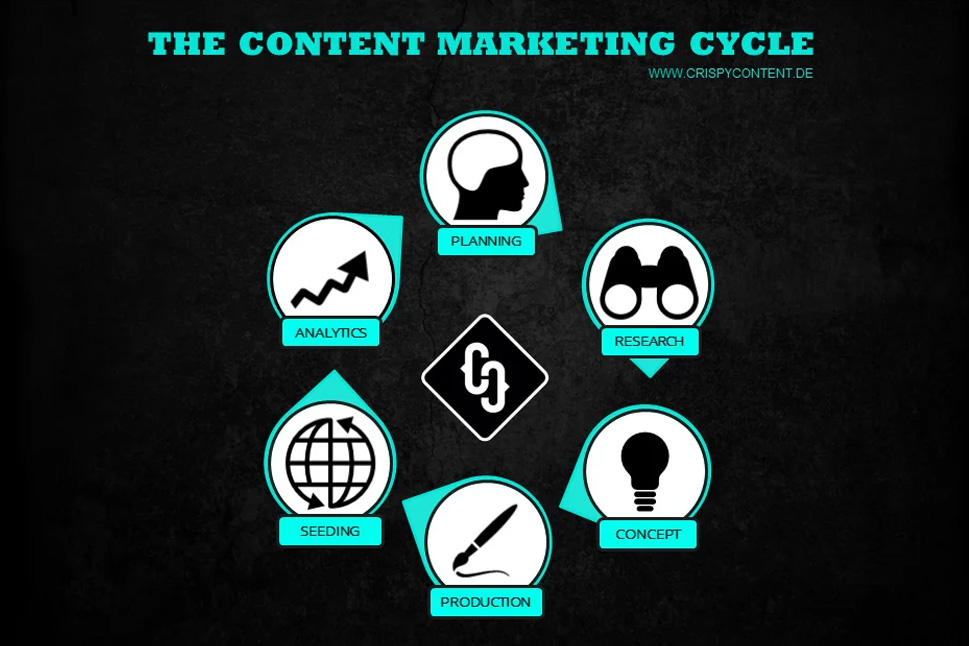
Your successful content marketing cycle in 6 steps
These 6 steps will help you develop your very own content marketing cycle.